Claude Code Subagent Mastery Stack 2026: From One Conversation to a Coordinated Agent Council
The complete learning + tooling stack for mastering Claude Code multi-agent workflows: 5 subagent patterns + custom agent authoring + the skill/subagent/MCP decision framework + orchestration failure modes + skill authoring. The full path from single-threaded coding to a reliable agent pipeline.
- Claude Code
- Agent SDK
- MCP
- Bash
- Markdown
- Proprietary
- Updated 2026-05-30
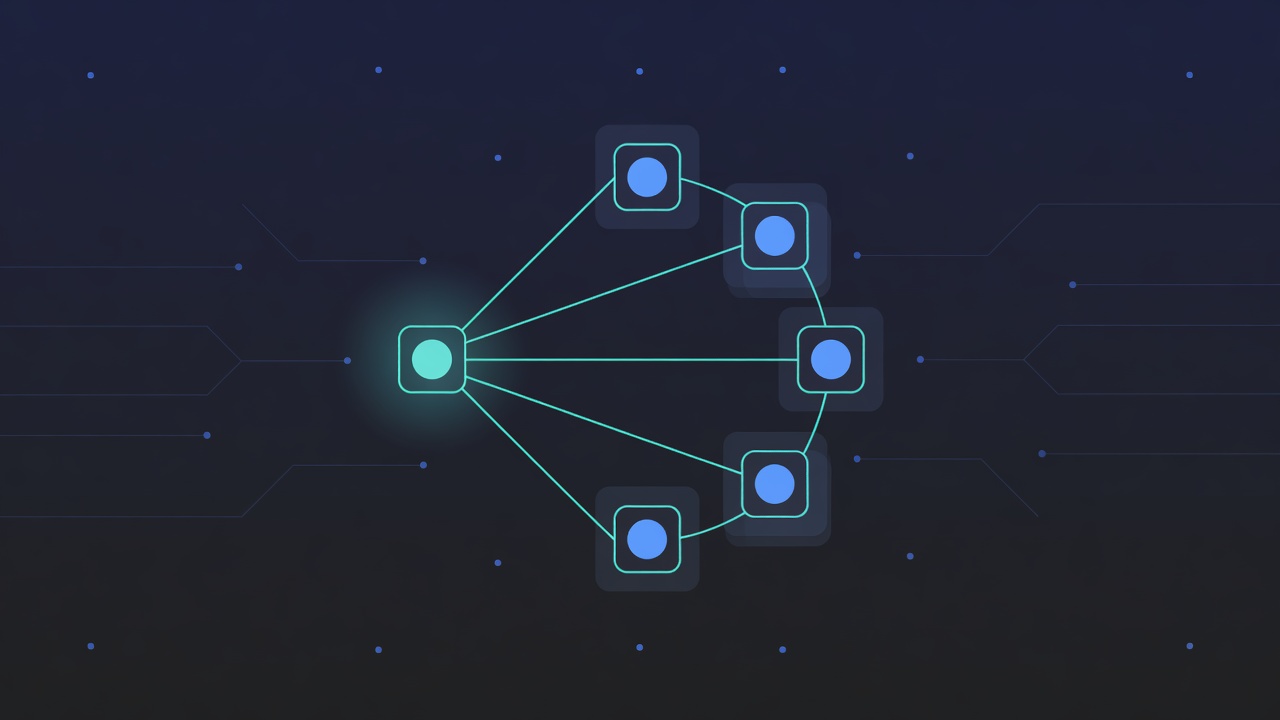
Single-threaded AI coding hit a wall in late 2025: one giant Claude conversation reads 30 files, fills its context window with exploration, then starts editing with half the working memory it needs. The 2026 answer is delegated specialization — a small council of subagents with strict information boundaries, instead of a single overloaded mind.
This collection assembles the complete path to get there: five deep-dive guides + the tooling, in the order you should learn them. Not theory — these are the patterns we use to ship dibi8 itself (we literally used parallel translation subagents to build the articles in this very stack).
TL;DR — The Mastery Stack at a Glance #
| # | Component | Layer | Role | Deep dive |
|---|---|---|---|---|
| 1 | 5 Subagent Patterns | Foundation | The five workflows: parallel fan-out, worktree isolation, specialist delegation, context protection, pipeline orchestration | Subagent Patterns |
| 2 | Custom Agent Authoring | Build | How to write .claude/agents/*.md — frontmatter, system prompt, tool allowlists | Custom Agent Authoring |
| 3 | Subagent vs MCP vs Skill | Decide | The three-axis framework — knowledge (skill), context (subagent), capability (MCP) | Subagent vs MCP vs Skill |
| 4 | Skill Authoring | Build | Package procedures Claude loads only when relevant — SKILL.md, progressive disclosure | Skill Authoring |
| 5 | Orchestration Postmortem | Avoid | The 5 ways pipelines fail: trust trap, context bleed, runaway fan-out, silent truncation, orphaned worktrees | Pipeline Postmortem |
| + | MCP Tool Builder | Tooling | Generate MCP tool scaffolds to extend agent capability | MCP Tool Builder |
The Learning Order (and Why) #
Start with the five patterns (1). Before you build anything custom, internalize when to spawn a subagent at all — parallel research fan-out is the lowest-friction entry point and the gains are immediate. The underlying principle threads through everything else: your parent conversation is a scarce resource; subagents are how you spend without exhausting it.
Then learn to author custom agents (2). Once you know the patterns, codify them. A custom agent is executable institutional knowledge — your review checklist, security gate, or migration auditor as a version-controlled .md file. The make-or-break detail is the description (the routing signal) and the tool allowlist (least privilege keeps a reviewer from “helpfully” editing the code it was meant to review).
Step back for the decision framework (3). This is the keystone. Before building another agent, ask: am I short on knowledge (→ write a skill), context (→ spawn a subagent), or capability (→ build an MCP server)? Most teams over-reach for MCP servers when a markdown file would ship the same outcome by lunch.
Master the skill axis (4). Skills are the most underrated extension — just-in-time expertise loaded only when relevant, keeping your base context lean. The craft is in the trigger description and progressive disclosure.
Then study how it all breaks (5). The postmortem is the difference between a demo and production. Every failure shares one root: trusting an agent’s claim as verified reality. Build verification (git diff, test exit codes) and bounds (stop conditions, budgets) into every seam.
Why This Stack Beats Ad-Hoc Learning #
Scattered blog posts teach you that subagents exist. This stack teaches you the full loop: when to delegate → how to build the worker → which extension to reach for → how to package reusable expertise → how to keep it from silently failing. It’s the same loop we run daily on dibi8 — the lived-experience moat, not regurgitated docs.
Setting Up Production-Ready Claude Code #
To run multi-agent pipelines at scale you want stable infrastructure: a reliable host for long sessions and CI gates (HTStack — HK VPS, the same IDC that hosts dibi8.com), and cloud headroom for parallel fan-out (DigitalOcean — $200 free credit). New to authoring agents that don’t fall over? Our $19 skills bundle on Gumroad ships five battle-tested skills plus the orchestrator prompts behind these patterns.
Beyond Mastery: Choosing What to Build On #
Once you’ve internalized the patterns above, the next questions are which tools to commit to. We wrote a decision trilogy to answer exactly that:
- Subagents vs LangGraph/CrewAI/AutoGen — when built-in subagents are enough, and when to graduate to a standalone framework.
- Claude Agent SDK vs OpenAI Agents SDK — the two leading agent SDKs head-to-head: hooks+subagents vs handoffs+guardrails.
- Claude Code vs Cline — autonomy vs control, for the agentic coding tool itself.
Master the patterns first; use the trilogy to decide what to build on.
Verdict #
Don’t learn subagents as five disconnected tricks. Walk the stack in order — patterns → authoring → decision framework → skills → failure modes — and you graduate from “one big conversation” to a coordinated agent council you can actually trust in production. Start with Pattern 1 today; layer the rest as your sessions get longer and your tasks get heavier.
💬 Discussion