Introduction
The GitHub Trending board in May 2026 tells a clear story: developers are flocking toward practical, high-leverage AI tools — not abstract experiments. Three projects dominated this month’s charts, each solving a distinct pain point that translates directly into time saved, money earned, or compliance reduced.
This article breaks down the hottest trending projects you should actually care about — why they matter, how to install them, and where their real commercial value lies. Whether you are a solo developer who wants to code faster, a fintech professional exploring Claude-powered analytics, or an indie hacker searching for automation tools, there is something here for you.
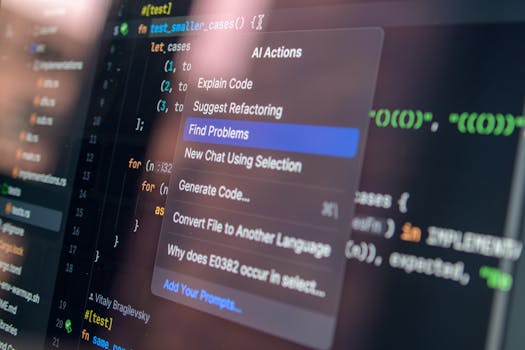 Image credit: Daniil Komov via Pexels
Project 1: Hmbown / DeepSeek-TUI — Your Terminal Is Now a Supercharged Coding Agent
Stars: 21,085 | +5,799 stars today | Repository: Hmbown/DeepSeek-TUI
If one project defined the current AI-coding hype cycle, it is DeepSeek-TUI. In a single day, it accumulated nearly 5,800 new stars — far outpacing every other trending repository. It is not just another ChatGPT-in-the-browser wrapper; it is a genuine terminal-based coding agent that integrates seamlessly into your existing development workflow.
What Makes It Different
DeepSeek-TUI runs locally from your terminal using the deepseek command. Instead of opening a web tab and typing into a text box, you interact directly inside your codebase. The agent streams reasoning blocks back to your terminal, reads and writes files on disk, and — critically — uses approval gates before making any filesystem changes. This means you stay in control while getting the speed boost of AI-assisted editing.
Unlike Cursor or Copilot which run as full GUI editors, DeepSeek-TUI is designed for terminal purists. If you spend your day in tmux, neovim, or zsh, this feels native. No context-switching between browser tabs and IDE windows.
Auto Mode: Smart Model Routing That Saves Money
The standout feature is auto mode (deepseek --model auto). Before sending each request, DeepSeek-TUI makes a tiny routing call using deepseek-v4-flash (no thinking enabled). The router evaluates your latest request and recent conversation context, then picks the optimal combination:
- Model:
deepseek-v4-flashfor quick tasks,deepseek-v4-profor complex architecture work - Thinking level:
offfor simple refactors,highormaxfor security reviews or debugging multi-step problems
This means short questions stay cheap, and only genuinely complex tasks trigger higher-cost inference. The upstream API never receives "model": "auto" — the TUI resolves it internally and charges you against the actual model used. Cost tracking happens transparently.
Installation — Every Platform Covered
 1# npm — easiest path
 2npm install -g deepseek-tui
 3
 4# Cargo — no Node.js required
 5cargo install deepseek-tui-cli --locked   # provides `deepseek`
 6cargo install deepseek-tui     --locked   # provides `deepseek-tui`
 7
 8# Homebrew (macOS)
 9brew tap Hmbown/deepseek-tui
10brew install deepseek-tui
11
12# Docker
13docker run --rm -it \
14  -e DEEPSEEK_API_KEY \
15  -v "$PWD:/workspace" \
16  ghcr.io/hmbown/deepseek-tui:latest
Auth is managed via deepseek auth set --provider deepseek. You can rotate keys or check config status without exposing secrets using deepseek auth status and deepseek auth clear.
For developers in mainland China, the project supports Cargo registry mirrors (like Tsinghua Tuna) and configurable release base URLs for faster downloads. Windows users benefit from Scoop package manager integration. ARM64 Linux (Raspberry Pi, Asahi, Graviton, HarmonyOS PC) works natively from v0.8.8 onward.
Sub-Agent Delegation
When a task is large enough, DeepSeek-TUI can spawn sub-agents. Each sub-agent inherits your auto-mode configuration unless you explicitly assign it a different model or thinking level. This gives you hierarchical coding workflows — delegate modules to specialized sub-agents while orchestrating everything from your main session.
Real-World Use Cases
| Scenario | Benefit |
|---|---|
| Rapid prototyping | Describe a feature in plain English, get working code in your editor |
| Legacy code refactoring | Batch-fix inconsistent patterns across hundreds of files |
| Security audits | Ask the agent to scan your repo for vulnerabilities with detailed reasoning |
| Debugging sessions | Paste error output; the agent traces root cause with evidence |
| Release management | Generate changelogs, update version numbers, prep git tags |
Competitive Landscape
| Tool | Editor | Pricing | Reasoning Streams | Approval Gates |
|---|---|---|---|---|
| DeepSeek-TUI | Terminal | Pay per token | ✅ Yes | ✅ Configurable |
| Cursor | GUI App | $20/mo | ✅ Yes | ❌ Full automation |
| GitHub Copilot | IDE Extension | $19/mo | Limited | ❌ None |
| Claude Code | Terminal | Pay per token | ✅ Yes | ✅ Yes |
DeepSeek-TUI undercuts Claude Code on pricing while matching its core capabilities. For teams running on Linux servers or headless CI pipelines, DeepSeek-TUI is the only option that runs comfortably in a terminal environment.
Project 2: anthropics / financial-services — Enterprise-Grade AI Agents for Wall Street
Stars: 13,496 | +1,343 stars today | Repository: anthropics/financial-services
While consumer-facing AI coding tools dominate headlines, Anthropic quietly released something far more commercially significant: a complete, production-ready AI agent suite for financial services. This is not a toy prototype — it covers investment banking, equity research, private equity, and wealth management workflows end-to-end.
What It Includes
The repository ships 11 named agents, each covering a specific financial workflow:
| Function | Agent | Output |
|---|---|---|
| Coverage & Advisory | Pitch Agent | Comps, precedents, LBO → branded pitch deck |
| Research & Modeling | Market Researcher | Sector overview + competitive landscape + peer comps |
| Research & Modeling | Earnings Reviewer | Earnings call analysis → model update → note draft |
| Fund Administration | GL Reconciler | Finds discrepancies, traces root cause |
| Operations & Compliance | KYC Screener | Parses onboarding docs, flags gaps via rules engine |
Plus vertical plugins for /comps, /dcf, /earnings, and more granular slash commands. Partner-built plugins from LSEG and S&P Global extend the ecosystem further.
Two Deployment Paths
What makes this truly distinctive is the dual distribution model:
Claude Cowork Plugin — Install directly in Claude.ai by pasting the repo URL or uploading a zip file. Pick individual agents or the full stack. Perfect for solo analysts or small teams.
Claude Managed Agents API — Deploy behind your own workflow engine via the
/v1/agentsendpoint. Comes withagent.yamlconfigs, leaf-worker subagent templates, steering events, and per-agent security notes. Designed for firms that need audit trails, role-based access, and integration with internal systems.
Why This Matters Commercially
Financial services is a $4 trillion industry in the U.S. alone. The friction between analyst work and AI tools has been enormous — most AI tools either lack domain expertise or cannot be deployed securely behind enterprise firewalls. This repository bridges both gaps:
- Domain depth: Skills are written by practitioners who understand comp tables, DCF models, and GL reconciliation, not generalist prompt engineers
- Enterprise readiness: Every output is staged for human sign-off. Nothing executes transactions, binds risk, or approves onboarding autonomously
- Compliance-aware: Clear disclaimers, staged outputs, and human-in-the-loop requirements align with regulatory expectations
- Partner extensibility: LSEG and S&P Global connectors mean your agents can pull live market data, not just static files
Getting Started
1# Via Claude Code marketplace
2claude plugin marketplace add anthropics/claude-for-financial-services
3claude plugin install financial-analysis@claude-for-financial-services
4
5# Or via Cowork settings: Settings → Plugins → Add plugin
6# Paste: https://github.com/anthropics/claude-for-financial-services
For Managed Agent deployments, cookbooks in managed-agent-cookbooks/ provide ready-made agent.yaml configurations for each named agent.
Risk & Responsibility
Anthropic is explicit: nothing in this repository constitutes investment, legal, tax, or accounting advice. These agents draft analyst work product — models, memos, research notes, reconciliations — for review by qualified professionals. You are responsible for verifying outputs and maintaining compliance with applicable laws. This is the correct framing for enterprise adoption.
Project 3: LearningCircuit / local-deep-research — Private, Encrypted AI Research at Scale
Stars: 6,542 | Repository: LearningCircuit/local-deep-research
As AI-generated content floods the internet, the ability to conduct genuine, deep research becomes a premium skill. Local Deep Research delivers on that promise by running entirely on your hardware — no data leaves your machine, no APIs send your queries to third parties, and every database connection uses SQLCipher encryption.
Performance That Rivals Cloud Models
Despite running locally, benchmarks show ~95% accuracy on SimpleQA when paired with Qwen3.6-27B on an RTX 3090. That performance level, combined with full offline operation, makes it compelling for researchers, journalists, and anyone handling sensitive topic queries.
Key Features
- 10+ search engines built in: arXiv, PubMed, and your own private documents
- All LLMs supported: llama.cpp, Ollama, Google AI Studio, OpenRouter, and any OpenAI-compatible endpoint
- SQLCipher encrypted database: Your research history is stored locally with military-grade encryption
- Privacy-first architecture: Zero telemetry, zero cloud dependency, fully self-hostable via Docker
Why “Local” Matters More Than Ever
In 2026, data privacy regulations (GDPR, CCPA, China PIPL, Brazil LGPD) make cloud-based AI research increasingly risky for professional use. A researcher studying pharmaceutical compounds, a journalist investigating corporate practices, or a competitive intelligence analyst — none of them want their research topics exposed to external APIs. Local Deep Research solves this problem completely.
Installation
1pip install local-deep-research
Or use the Docker image for isolated deployment:
1docker pull localdeepresearch/local-deep-research
Side-by-Side Comparison
| Feature | DeepSeek-TUI | Anthropic FinServ | Local Deep Research |
|---|---|---|---|
| Category | Terminal coding agent | Financial AI agents | Local research engine |
| Daily Star Growth | +5,799 | +1,343 | N/A (steady) |
| Total Stars | 21,085 | 13,496 | 6,542 |
| Pricing | Pay-per-token API | Free (Cowork) / API | Free (open source) |
| Privacy | Local binary, API calls | Staged output + human review | Fully offline possible |
| Best For | Developers, DevOps | Financial analysts | Researchers, journalists |
| Deployment | Terminal, Docker | Cowork plugin, API, Docker | pip, Docker |
| Commercial Potential | ★★★★★ | ★★★★★ | ★★★★☆ |
How We Ranked These Projects
Our selection criteria prioritize commercial relevance over raw star count. Here is why these three made the cut:
- Velocity matters more than volume — DeepSeek-TUI’s 5,799-star daily gain signals a product-market inflection point that raw numbers cannot capture alone
- Vertical specialization wins — Anthropic’s financial-services suite targets a documented, budget-rich market with identifiable buyers
- Privacy is a growing moat — Local Deep Research addresses the regulatory tailwinds pushing enterprises away from cloud AI
Conclusion: What Should You Try First?
- Developers wanting faster coding → Start with DeepSeek-TUI. Install via
npm, configure your API key, and experience the difference between browser-bound AI and terminal-native agentic workflows. - Financial professionals → Install the Pitch Agent or Market Researcher via Cowork and see how quickly structured financial analysis goes from hours to minutes.
- Researchers & journalists → Try Local Deep Research with your own document collection. The offline guarantee alone justifies the setup effort.
All three projects demonstrate that 2026’s open-source AI revolution is shifting from gimmicks to infrastructure — tools that solve expensive, recurring problems for people who have budgets to spend.
Related Articles
- Agent-Skills by Addy Osmani: Production-Grade Engineering for AI Coding Agents
- Docuseal: The Open-Source Alternative to DocuSign
- Top 5 CLI Tools Transforming Developer Workflows in 2026
💬 What do you think about terminal-based AI coding agents? Have you tried DeepSeek-TUI yet? Share your thoughts in the comments below.
Have questions or ideas? Feel free to leave a comment below. Sign in with GitHub to join the discussion.