Claude Code Subagents vs LangGraph vs CrewAI vs AutoGen (2026)
You already orchestrate subagents inside Claude Code. Do you actually need LangGraph, CrewAI, or AutoGen? A 2026 decision guide with real benchmarks, GitHub-star reality, and the honest line between "built-in is enough" and "time to graduate."
- ⭐ 7556
- Claude Code
- Agent SDK
- LangGraph
- CrewAI
- AutoGen
- Python
- Mixed (MIT / Commercial)
- Updated 2026-05-30
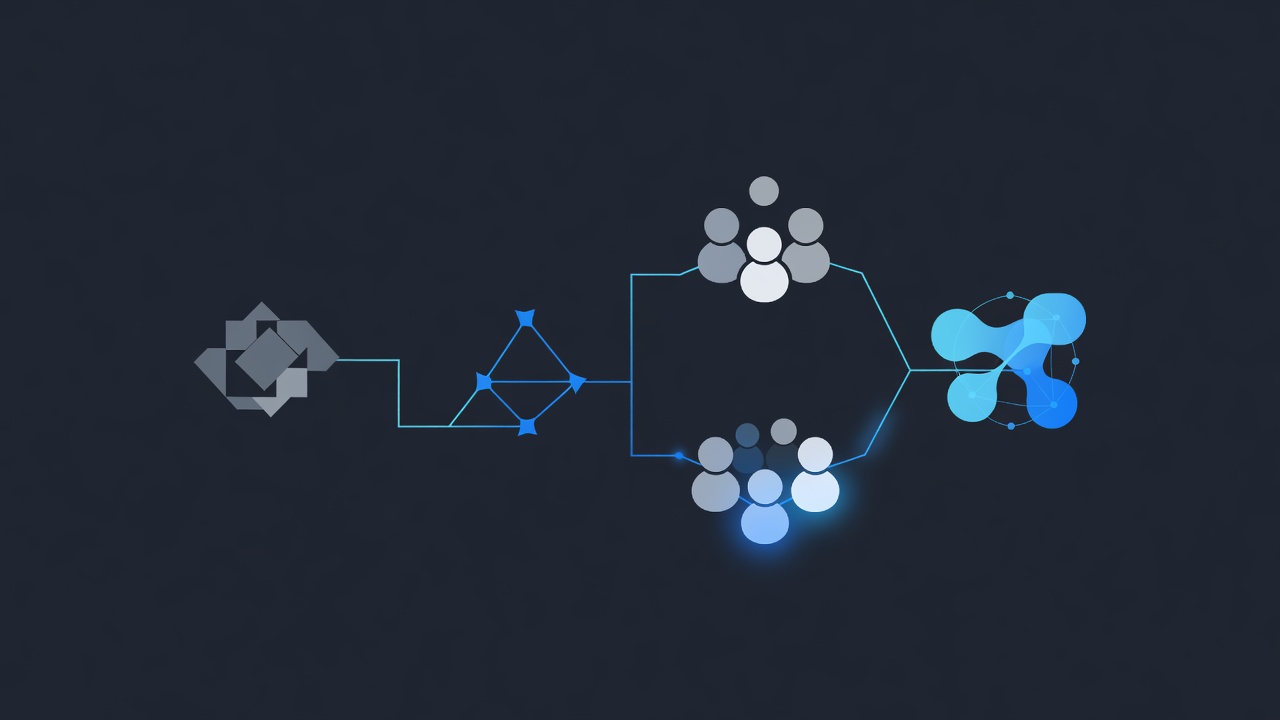
Introduction #
If you’ve worked through the subagent patterns and custom agent authoring, you can already orchestrate a small council of agents — parallel fan-out, isolated contexts, specialist delegation — without leaving Claude Code. So a fair question follows: do you actually need LangGraph, CrewAI, or AutoGen?
The internet is full of “LangGraph vs CrewAI vs AutoGen” horse-race posts. This isn’t one of them. We’re going to answer the question that actually matters to someone who already has Claude Code subagents working: when is built-in orchestration enough, and when is it time to graduate to a standalone framework? We’ll use real 2026 benchmarks, the honest GitHub-star picture, and our own lived experience shipping dibi8 — whose entire article-translation pipeline runs on plain Claude Code subagents, by deliberate choice.
Two Different Worlds #
There’s a category error baked into most comparisons: they line Claude Code subagents up next to LangGraph as if they’re competitors. They’re not the same kind of thing.
- Claude Code subagents are orchestration inside an agent. You spawn workers from a parent conversation; each gets its own context window; the harness manages their lifecycle. Zero extra infrastructure — it’s already in the tool you’re using.
- Standalone frameworks (LangGraph, CrewAI, AutoGen) are libraries you build an application around. You write Python, define the graph or crew, wire in models and tools, deploy it as a service. They’re how you ship a multi-agent product, not how you get a coding task done.
The real decision isn’t “which is best.” It’s “has my problem outgrown the built-in layer?”
The Four Contenders, One Line Each #
- Claude Agent SDK — Anthropic-native. Renamed from the Claude Code SDK in late 2025; as of April 2026 ships as both a Python and a TypeScript package. Safety-first design, extended thinking, tightest Claude integration. Claude-only.
- LangGraph — workflow as an explicit directed graph with conditional edges. Highest production readiness: checkpointing, time-travel, LangSmith observability, resumable runs. ~12,800 GitHub stars but overtook CrewAI in enterprise adoption in early 2026.
- CrewAI — role-based crews. Define agents by role/goal/backstory; a working team in ~20 lines of Python. Lowest learning curve. ~31,200 stars.
- AutoGen / AG2 — conversational GroupChat. Microsoft’s framework; the v0.4 rewrite is now AG2 with an event-driven, async-first core. ~42,000 stars (the historical mindshare leader) but no longer the actively-developed headline choice.
The Comparison at a Glance #
| Orchestration model | Learning curve | Production readiness | Model lock-in | Stars (Apr 2026) | Best for | |
|---|---|---|---|---|---|---|
| Claude Code subagents | Parent-spawns-workers, built-in | None (it’s in the CLI) | High for dev/CI work | Claude-only | — | Coding, research fan-out, pipelines |
| Claude Agent SDK | Tool-use chain + subagents | Low | High (safety-first) | Claude-only | — | Anthropic-native production apps |
| LangGraph | Directed graph + conditional edges | Steep | Highest (checkpoint/observability) | Agnostic | ~12.8k | Complex, auditable, stateful workflows |
| CrewAI | Role-based crews | Lowest | Medium (growing) | Agnostic | ~31.2k | Rapid multi-agent prototyping |
| AutoGen / AG2 | Conversational GroupChat | Medium | Medium (rewrite maturing) | Agnostic | ~42k | Offline, quality-sensitive chats |
Benchmark color: in 2026 testing, LangGraph led complex tasks at ~62% success vs CrewAI’s ~54%; on medium tasks (3–5 tool calls, some state) the spread was LangGraph ~76% > Smolagents ~73% > CrewAI ~71% > AutoGen ~68%. The gaps are real but not chasms — workflow fit matters more than the leaderboard.
When Claude Code Subagents Are Already Enough #
Don’t graduate if your need is any of these. Built-in subagents cover them today, with no new infrastructure:
- Parallel research fan-out. Five agents each reading a different subsystem, results merged. This is the highest-ROI subagent pattern and it’s free.
- Specialist delegation. A
security-auditororcode-reviewercustom agent with its own tool allowlist and system prompt. - Context protection. Offloading a 30-file exploration so it doesn’t crowd your parent conversation’s working memory.
- Pipeline orchestration for dev tasks. Find → verify → synthesize, where each stage is a delegated worker.
Concrete proof: dibi8’s own multilingual pipeline. Every article you read here in English, Chinese, Korean, and Vietnamese is produced by parallel Claude Code translation subagents — one per language, fanned out, results verified against a npm run build ground truth. We deliberately did not reach for LangGraph. There’s no durable state to checkpoint, no human approval gate, no multi-vendor requirement. Built-in subagents ship the outcome by lunch; a framework would have been pure overhead.
When to Graduate to a Standalone Framework #
Reach for LangGraph / CrewAI / AutoGen when you hit one of these walls — things built-in subagents don’t natively provide:
- Durable state across runs. You need a workflow that pauses, persists, and resumes hours or days later — survive a crash, pick up where it stopped. → LangGraph checkpointing.
- Human-in-the-loop approval gates. A human must review and approve before the pipeline proceeds (refunds, deployments, content publishing). → LangGraph (explicit interrupt nodes).
- Multi-vendor model mixing. GPT for one step, Claude for another, a local model for a third — in one pipeline. → any agnostic framework.
- Audit trails for compliance. Every agent decision logged, replayable, attributable. → LangGraph + LangSmith.
- You’re shipping a product, not doing a task. The multi-agent system is the application, with its own users, uptime, and deployment lifecycle. That’s an app — build it on a framework.
The line is clean: subagents are for getting work done inside Claude Code; frameworks are for building a multi-agent application that outlives the session.
Which Framework, If You Do Graduate #
- LangGraph — the default for serious production. Pick it when you need explicit control, checkpointing, human-in-the-loop, or audit trails. Steepest curve, highest ceiling. The benchmark leader on complex tasks.
- CrewAI — pick it for speed to first result. Prototyping a multi-agent team, or development velocity outweighs fine-grained control. The role/goal/backstory DSL is genuinely fast to think in.
- AutoGen / AG2 — pick it only if its conversational GroupChat maps naturally to your problem (offline, thoroughness-over-latency). For greenfield 2026 projects, default to LangGraph or CrewAI instead — AG2 is stable but not where the active investment is.
- Claude Agent SDK — pick it when you’re all-in on Claude and want the tightest native integration, safety features, and extended thinking, and don’t need multi-vendor flexibility. It’s the production-grade extension of the same subagents you already know.
Anti-Patterns #
- Premature framework adoption. Spinning up LangGraph for what two Claude Code subagents would do. You’ve shipped a deployment, auth, and dependency-management problem to solve a task that needed neither. The most common waste we see.
- Outgrowing subagents but refusing to graduate. The opposite failure: bolting fake “state” onto stateless subagent runs with brittle file hacks because you won’t adopt checkpointing. If you need durable resumable state, that’s LangGraph’s job — stop reinventing it badly.
- Choosing by star count. AutoGen has the most stars and the least active development. Stars are historical mindshare, not a 2026 recommendation.
- Multi-vendor lock-in by accident. Building on the Claude Agent SDK and then discovering you need GPT in the loop. Decide the multi-vendor question up front — it’s the one choice that’s expensive to reverse.
Setting Up Production-Ready Agent Infrastructure #
Whether you stay on Claude Code subagents or graduate to a framework, multi-agent work wants stable infrastructure underneath:
A reliable host for long-running agent processes and CI. Frameworks deploy as services; even subagent pipelines want a box that stays up for unattended runs. HTStack — Hong Kong VPS with low-latency mainland-China access and stable BGP. Same IDC that hosts dibi8.com, where we run our own agent pipelines. $5-12/month value tier.
Cloud headroom for parallel fan-out. When agents fan out wide — or a LangGraph app runs alongside its observability stack — you want spare CPU. DigitalOcean — $200 free credit for 60 days across 14+ regions.
The orchestration playbook. The fastest way to internalize when to delegate and when to graduate is to study working examples. We packaged five battle-tested skills as a $19 bundle on Gumroad — see the floating CTA in the corner — including the orchestrator prompts and custom agent definitions behind dibi8’s own pipeline.
Related Reading #
- Subagent Patterns — the five built-in workflows you should master before any framework.
- Subagent vs MCP vs Skill — the decision framework for the built-in layer.
- Custom Agent Authoring Guide — how to build a specialist subagent.
- Multi-Agent Pipeline Postmortem — the 5 ways orchestration fails, framework or not.
Verdict #
Stop framing it as “Claude Code vs LangGraph.” Built-in subagents and standalone frameworks live in different worlds: one gets work done inside your agent, the other ships a multi-agent application. Stay on subagents for parallel research, specialist delegation, context protection, and dev pipelines — they cover most real work with zero infrastructure, exactly as dibi8’s own multilingual pipeline proves. Graduate to a framework the moment you need durable state, human-in-the-loop, multi-vendor models, or audit trails — and when you do, default to LangGraph for control, CrewAI for speed, the Claude Agent SDK for Anthropic-native production. The cheapest layer that solves your problem wins every time.
💬 Discussion